
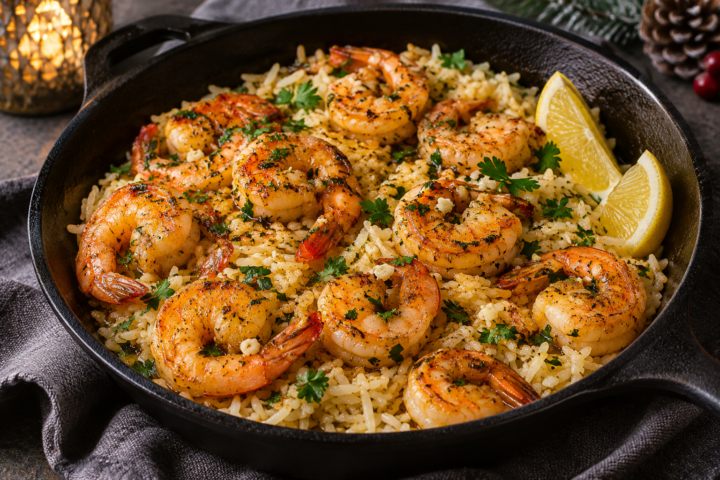
This garlic butter shrimp and rice skillet turns a short ingredient list into a warm, satisfying dinner with buttery garlic, tender shrimp, fluffy rice, lemon, and herbs. Everything finishes in one pan, so it feels special enough for a winter supper or Christmas-season meal without leaving a sink full of dishes.
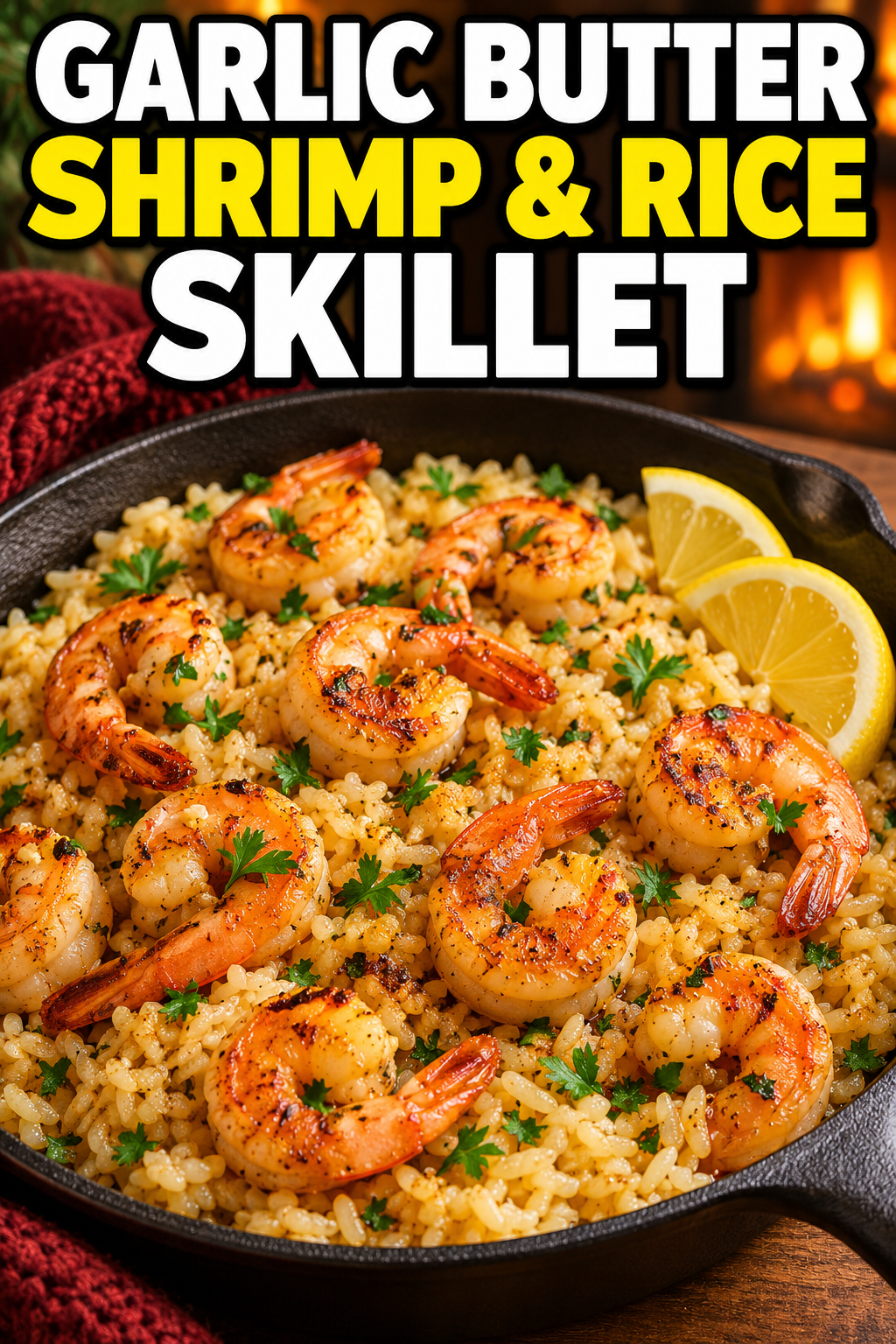
The method is deliberately simple: sear the shrimp briefly, build the rice in the same garlicky pan, and return the shrimp only at the end. That timing matters. It keeps the seafood juicy while the rice absorbs the savory browned bits, butter, broth, and aromatics.
Why this one-pan shrimp dinner works
Shrimp cooks much faster than rice. Removing it after a quick sear prevents the most common skillet-dinner problem: rubbery shrimp. Toasting the rice for a minute before adding broth gives the grains a lightly nutty flavor and helps them stay separate rather than turning heavy or gummy.
The final squeeze of lemon is more than garnish. Its acidity balances the butter and makes the garlic and parsley taste brighter. For another rich pasta-style dinner, try Creamy Garlic Butter Shrimp Alfredo. If you want a baked option, the Garlic Butter Shrimp Stuffed Shells are especially cozy.
Ingredients and smart substitutions
Large raw shrimp
Use peeled and deveined shrimp for the quickest preparation. Large shrimp are easier to sear without overcooking than very small shrimp. Frozen shrimp are perfectly suitable: thaw them overnight in the refrigerator, or place the sealed package in cold water, then dry thoroughly. Avoid thawing seafood at room temperature.
Long-grain white rice
Regular long-grain rice provides the most reliable texture and timing. Rinse it under cool water until the water is much less cloudy, then drain well. Jasmine rice can work but may soften a little sooner. Brown rice is not a direct substitution because it needs substantially more liquid and cooking time.
Butter, olive oil, and garlic
A combination of butter and olive oil gives the dish rich flavor while helping the butter tolerate the initial searing heat. Freshly minced garlic tastes best here. Keep the heat moderate once the garlic goes into the pan so it becomes fragrant without turning bitter.
Broth and seasonings
Low-sodium chicken, seafood, or vegetable broth all work. Starting with low-sodium broth lets you adjust the salt after the rice cooks. Paprika adds warm color and gentle depth; red pepper flakes are optional. Lemon zest, lemon juice, and parsley keep the finished skillet lively.
How to make garlic butter shrimp and rice
- Dry and season the shrimp. Moisture prevents browning, so blot the shrimp carefully before seasoning.
- Sear briefly. Cook in olive oil and one tablespoon of butter for about one to two minutes per side. Transfer the shrimp while the centers are still slightly underdone.
- Build the flavor base. Soften the shallot or onion, then stir in the garlic just until fragrant.
- Toast the rice. Stir the drained rice through the butter for one minute so every grain is lightly coated.
- Simmer without peeking. Add the broth, cover tightly, and cook over low heat. Repeatedly lifting the lid releases the steam the rice needs.
- Rest, then finish. Let the covered rice rest for five minutes. Fluff it, return the shrimp, and heat gently until the shrimp are opaque and reach 145°F.
Tips for fluffy rice and tender shrimp
- Use a skillet with a well-fitting lid. Escaping steam can leave the rice firm and the pan dry.
- Keep the simmer low. A hard boil cooks off the liquid before the center of the rice becomes tender.
- Do not crowd the shrimp. If your skillet is narrow, sear it in two batches.
- Measure the rice and broth rather than estimating. Small changes make a noticeable difference in a one-pan rice recipe.
- If the rice is still firm when the liquid is absorbed, add two to four tablespoons of hot broth, cover, and cook for another three to five minutes.
- If the rice looks wet after the resting time, leave it uncovered over very low heat for one or two minutes, then fluff gently.
Ways to change the skillet
Add vegetables: Stir in a cup of frozen peas during the final five minutes, or fold in two handfuls of baby spinach when the cooked shrimp returns. Diced red bell pepper can cook with the onion.
Make it creamy: After the rice rests, fold in two or three tablespoons of grated Parmesan and a splash of cream. Keep the additions modest so the rice remains fluffy.
Give it Cajun warmth: Replace the paprika with one to two teaspoons of salt-free Cajun seasoning. For a fully creamy version, see Creamy Cajun Shrimp and Spinach Pasta.
Use a different herb: Chives or dill can replace parsley. Dill is especially good when serving the skillet with roasted green beans or asparagus.
What to serve with it
Because the skillet already includes a protein and starch, the best sides are fresh and simple. Try a lemony green salad, roasted broccoli, sautéed green beans, asparagus, or steamed peas. Warm bread is useful for catching the garlic butter at the bottom of the bowl.
For holiday planning, pair it with a crisp salad and one elegant vegetable side, or use it as a relaxed option from this collection of Christmas shrimp recipes. It also fits naturally among these cozy pescatarian winter dinners.
Storage and reheating
Refrigerate leftovers within two hours of cooking. Because cooked rice and seafood both need careful handling, transfer the food to shallow containers so it cools quickly, then refrigerate for up to two days. Do not leave the covered skillet sitting at room temperature for an extended period.
Reheat individual portions in a covered skillet over low heat with one or two teaspoons of broth, or microwave in short intervals with a damp paper towel over the bowl. Heat leftovers to 165°F. Gentle reheating helps, but shrimp naturally becomes firmer the second time around.
You can freeze the cooled skillet for up to one month in an airtight container, although the shrimp will be slightly less tender after thawing. Thaw overnight in the refrigerator and reheat only once.
Garlic Butter Shrimp and Rice Skillet Recipe
Garlic Butter Shrimp and Rice Skillet
Tender garlic-butter shrimp with fluffy lemon-herb rice, all finished in one skillet.
Prep time: | Cook time: | Total: | Servings: 4
Ingredients
- 1 pound large raw shrimp, peeled and deveined
- 1 cup long-grain white rice, rinsed and well drained
- 2 cups low-sodium seafood, chicken, or vegetable broth
- 3 tablespoons unsalted butter, divided
- 1 tablespoon olive oil
- 5 garlic cloves, minced and divided
- 1 small shallot or 1/2 small onion, finely chopped
- 1/2 teaspoon paprika
- 1/2 teaspoon kosher salt, divided, plus more to taste
- 1/4 teaspoon black pepper
- Pinch of red pepper flakes, optional
- 1 teaspoon finely grated lemon zest
- 1 tablespoon fresh lemon juice
- 2 tablespoons chopped fresh parsley
Instructions
- Pat the shrimp very dry. Season with paprika, half the salt, black pepper, and optional red pepper flakes.
- Heat the olive oil and 1 tablespoon butter in a large covered skillet over medium-high heat. Add the shrimp in one layer and cook for 1 to 2 minutes per side, until lightly browned but not fully cooked through. Transfer to a clean plate.
- Reduce the heat to medium. Add the remaining 2 tablespoons butter and the shallot. Cook for about 3 minutes, until softened. Add the garlic and cook for 30 seconds.
- Stir in the drained rice and cook for 1 minute. Add the broth and remaining salt, scraping any browned bits from the skillet.
- Bring to a gentle boil, cover, reduce the heat to low, and simmer for 15 to 18 minutes, or until the rice is tender and the liquid is absorbed. Remove from the heat and rest, covered, for 5 minutes.
- Fluff the rice gently. Fold in the lemon zest, lemon juice, parsley, and shrimp. Cover and warm over low heat for 2 to 3 minutes, until the shrimp are opaque and reach 145°F. Taste and adjust the seasoning before serving.
Note: Broth absorption varies by rice and pan. If the rice is still firm, add a few tablespoons of hot broth and continue cooking, covered, for several minutes.
Frequently asked questions
Can I use precooked shrimp?
Yes, but skip the initial sear. Fold thawed, precooked shrimp into the rice only after its five-minute rest, then warm gently until heated through. Overheating will make it tough.
Can I make this with cauliflower rice?
Not as a direct one-for-one substitution. Cauliflower rice releases water and needs only a few minutes of cooking, so the broth quantity and entire method would need to change.
Why did my shrimp release so much water?
It was probably still wet from thawing or the pan was crowded. Dry it thoroughly, heat the skillet before adding it, and cook in batches if necessary.
Can I prepare it ahead?
The skillet is best immediately after cooking. You can save time by peeling the shrimp, chopping the aromatics, rinsing the rice, and measuring the seasonings earlier in the day. Keep the shrimp refrigerated until you are ready to cook.