
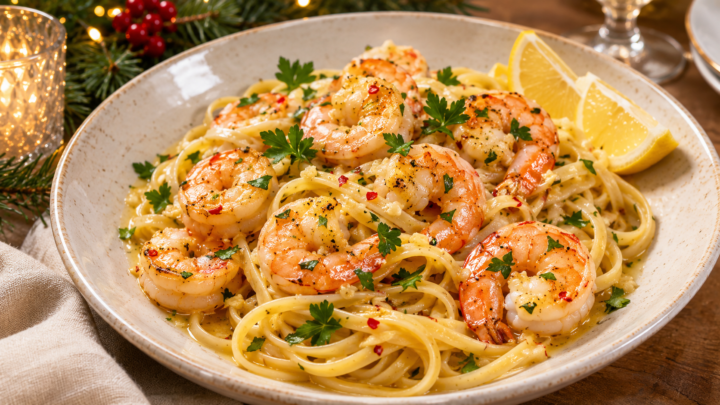
This Christmas shrimp scampi with garlic lemon linguine is bright, buttery, and special enough for a holiday dinner without turning the kitchen into an all-day project. Plump shrimp, fresh garlic, lemon, parsley, and a glossy butter sauce coat every strand of pasta. The colors are naturally festive, and the entire dish can be on the table in about 35 minutes.
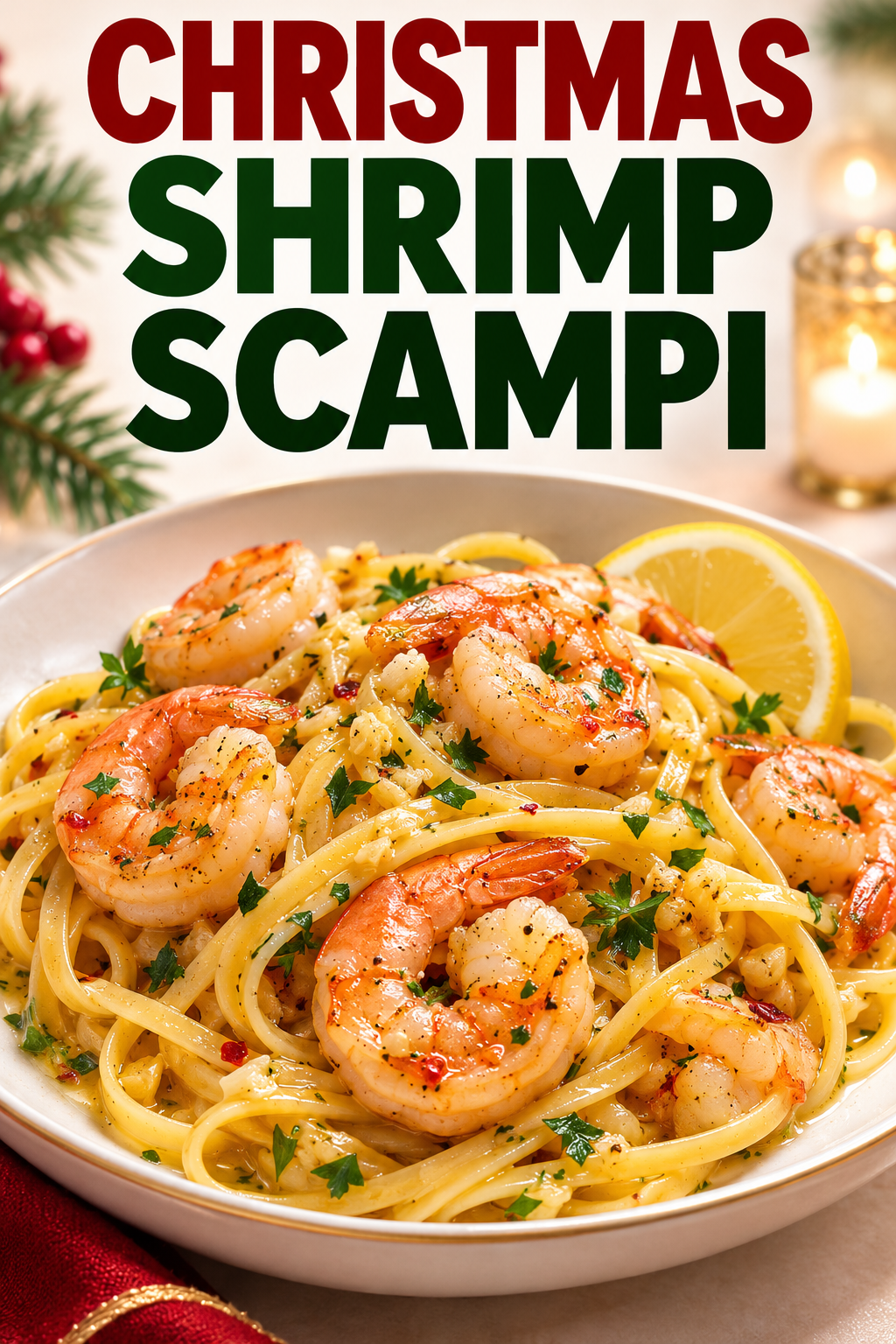
The key is timing. Shrimp cooks much faster than linguine, so it is seared briefly and removed before the sauce is built. It returns only after the pasta has been tossed with garlic butter, lemon, and starchy cooking water. That keeps the seafood juicy while the sauce becomes silky rather than oily.
Why shrimp scampi suits Christmas dinner
Shrimp feels celebratory but needs very little preparation. Scampi also gives you a lighter alternative to cream-based seafood pasta while still delivering the garlic-butter flavors that already resonate strongly with Scrupulous Catholic readers.
It works as a Christmas Eve main course, one component of a Feast of the Seven Fishes menu, or a fast dinner during the busy week before Christmas. Pair it with one green vegetable and bread, and the meal is complete.
Ingredients that make the sauce work
Large raw shrimp
Use peeled and deveined large shrimp, preferably with tails removed for easier eating. Frozen shrimp is convenient and reliable when thawed safely in the refrigerator. Drain it well and blot every piece dry before seasoning; wet shrimp steams instead of browning and can make the sauce watery.
Butter and olive oil
Olive oil helps the shrimp sear while butter creates the signature flavor. Dividing the butter keeps some of it fresh for the final sauce. Unsalted butter is easiest to control because pasta water, broth, and Parmesan can all contribute salt.
Fresh garlic
Six cloves create a clear garlic flavor without overwhelming the lemon and shrimp. Mince the garlic evenly so it cooks at the same rate. Once it goes into the pan, lower the heat and watch closely; browned garlic can become bitter.
Lemon
Use both zest and juice. Zest provides fragrant citrus oils, while juice brings acidity that balances the butter. Add the juice late in the process so its flavor stays fresh.
White wine or broth
Dry white wine adds complexity, but low-sodium seafood, chicken, or vegetable broth is a completely practical substitute. Either liquid loosens the browned bits from the pan and forms the base of the sauce.
How to prevent rubbery shrimp
- Dry the shrimp thoroughly. Surface moisture slows browning and lengthens the cooking time.
- Use a hot, wide skillet. A crowded pan traps steam. Work in two batches if needed.
- Cook only until lightly golden. One to two minutes per side is usually enough for large shrimp at this stage.
- Remove it before fully done. The centers may still look slightly translucent because the shrimp will finish in the warm sauce.
- Return it at the very end. Toss only until opaque and 145°F, then serve promptly.
The secret to glossy scampi sauce
Before draining the pasta, reserve at least one cup of its cooking water. The starch in this water helps butter and broth cling to the linguine. Add it gradually while tossing vigorously. The sauce should look slightly loose in the skillet because the pasta continues absorbing liquid as it moves to the table.
Finish off the heat with the remaining butter, lemon juice, zest, and parsley. This gentle finish helps the butter emulsify instead of separating into a greasy layer.
Make it festive without gimmicks
Fresh parsley and a small amount of red pepper naturally supply Christmas color. A serving platter with lemon wedges looks polished without complicated garnishes. Avoid burying the shrimp beneath cheese or heavy decorations; let the golden seafood and glossy pasta be the focus.
For a larger holiday spread, serve the scampi after Creamy Christmas Lobster Bisque or alongside appetizers from the existing Christmas seafood appetizers collection. It also belongs naturally in the Christmas shrimp recipes hub.
Serving ideas
Choose sides that contrast with the buttery pasta: roasted asparagus, green beans, broccolini, or a crisp arugula salad with lemon vinaigrette. Warm crusty bread catches the sauce, while garlic bread is best kept lightly seasoned so it does not compete with the scampi.
For a meatless Catholic holiday meal, add a simple vegetable starter and finish with fruit or a modest Christmas dessert. The recipe also works as one of several smaller seafood courses.
Useful substitutions
Different pasta: Spaghetti, fettuccine, or angel hair can replace linguine. Angel hair cooks quickly, so prepare the shrimp and sauce ingredients before boiling it.
Without wine: Use broth and add an extra teaspoon of lemon juice after tasting.
More vegetables: Fold in baby spinach at the end, or add halved cherry tomatoes to the garlic for two minutes.
Milder version: Omit the red pepper flakes. Black pepper supplies enough gentle warmth.
Gluten-free: Use a dependable gluten-free linguine and reserve its cooking water as directed; the sauce may require a little less water.
Christmas Shrimp Scampi Recipe
Christmas Shrimp Scampi with Garlic Lemon Linguine
Juicy shrimp and linguine tossed in a glossy garlic, butter, lemon, and parsley sauce.
Prep: | Cook: | Total: | Serves: 4
Ingredients
- 12 ounces linguine
- 1 1/4 pounds large raw shrimp, peeled and deveined
- 3/4 teaspoon kosher salt, divided
- 1/4 teaspoon black pepper
- 2 tablespoons olive oil
- 5 tablespoons unsalted butter, divided
- 6 garlic cloves, finely minced
- 1/4 teaspoon red pepper flakes, optional
- 1/2 cup dry white wine or low-sodium broth
- 1 teaspoon finely grated lemon zest
- 3 tablespoons fresh lemon juice
- 1/3 cup chopped fresh parsley
- 1/2 to 1 cup reserved pasta water
- Lemon wedges, for serving
Instructions
- Bring a large pot of well-salted water to a boil. Cook the linguine until just al dente. Reserve 1 cup pasta water, then drain.
- While the pasta cooks, pat the shrimp very dry and season with 1/2 teaspoon salt and black pepper.
- Heat the olive oil and 1 tablespoon butter in a large skillet over medium-high heat. Add the shrimp in one layer and cook for 1 to 2 minutes per side, until lightly golden but not fully cooked. Transfer to a clean plate.
- Reduce the heat to medium-low. Add 2 tablespoons butter, the garlic, and optional red pepper flakes. Cook for 30 to 45 seconds, stirring constantly.
- Add the wine or broth. Simmer for 2 to 3 minutes, scraping the bottom of the skillet, until slightly reduced.
- Add the drained linguine and 1/2 cup pasta water. Toss over medium-low heat for 1 to 2 minutes until the sauce coats the pasta. Add more pasta water a few tablespoons at a time if needed.
- Remove the skillet from the heat. Add the remaining 2 tablespoons butter, lemon zest, lemon juice, parsley, remaining salt, and shrimp. Toss until glossy and the shrimp are opaque and reach 145°F.
- Taste and adjust the salt, lemon, or pasta water. Serve immediately with lemon wedges.
Note: If the skillet is too small to toss the pasta comfortably, combine everything in the warm pasta pot instead.
Storage and reheating
Refrigerate leftovers within two hours in a shallow airtight container and use within two days. Seafood pasta is best fresh, but it can be reheated gently in a covered skillet over low heat with a splash of broth or water. Heat leftovers to 165°F and avoid prolonged cooking.
Freezing is not recommended. The pasta can become soft and the shrimp may turn firm after thawing.
Troubleshooting
Why is the sauce greasy?
The butter may have been added over high heat or there was not enough starchy pasta water. Remove the pan from the heat and toss in warm pasta water one tablespoon at a time.
Why is the pasta dry?
It continued absorbing sauce after cooking. Add a splash of reserved pasta water or warm broth and toss before serving.
Can I use precooked shrimp?
Yes, but skip the searing step. Add thawed precooked shrimp only during the final toss and heat it just until warm.
Can I prepare it ahead?
Scampi is best freshly cooked. You can peel the shrimp, mince the garlic, chop parsley, and measure the sauce ingredients earlier in the day. Keep the shrimp refrigerated and boil the pasta shortly before serving.